Most Shopify stores are built with care. Product pages are polished. Images are clean. The checkout flow works without friction. On the surface, everything looks ready for growth. Yet many stores hit a ceiling. Traffic slows, rankings stall, and conversions plateau.
The reason is simple. Visibility alone is not enough. A store can exist in search results without earning real attention. What separates a store that gets clicks from one that gets ignored is trust. And that trust is built outside your website.
Off page SEO is where that shift begins. It signals to search engines and customers that your store is worth noticing. When other sites mention your brand, when people share your content, when your products appear in the right places, your store gains credibility.
This is the difference between being listed and being chosen. Integrating off page SEO into your Shopify marketing project turns your store from a static presence into something people recognize, trust, and return to.
What Off Page SEO Means for Shopify Stores
Off Page SEO in Simple Terms
Off page SEO is everything that happens outside your Shopify store that helps people and search engines trust it. It is not about tweaking product pages or fixing technical settings. It is about how your store shows up across the wider internet.
Think of it as reputation. When other websites link to your store, when your brand is mentioned in articles, or when your content is shared on social platforms, it sends a clear signal. Your store is active, relevant, and worth paying attention to.
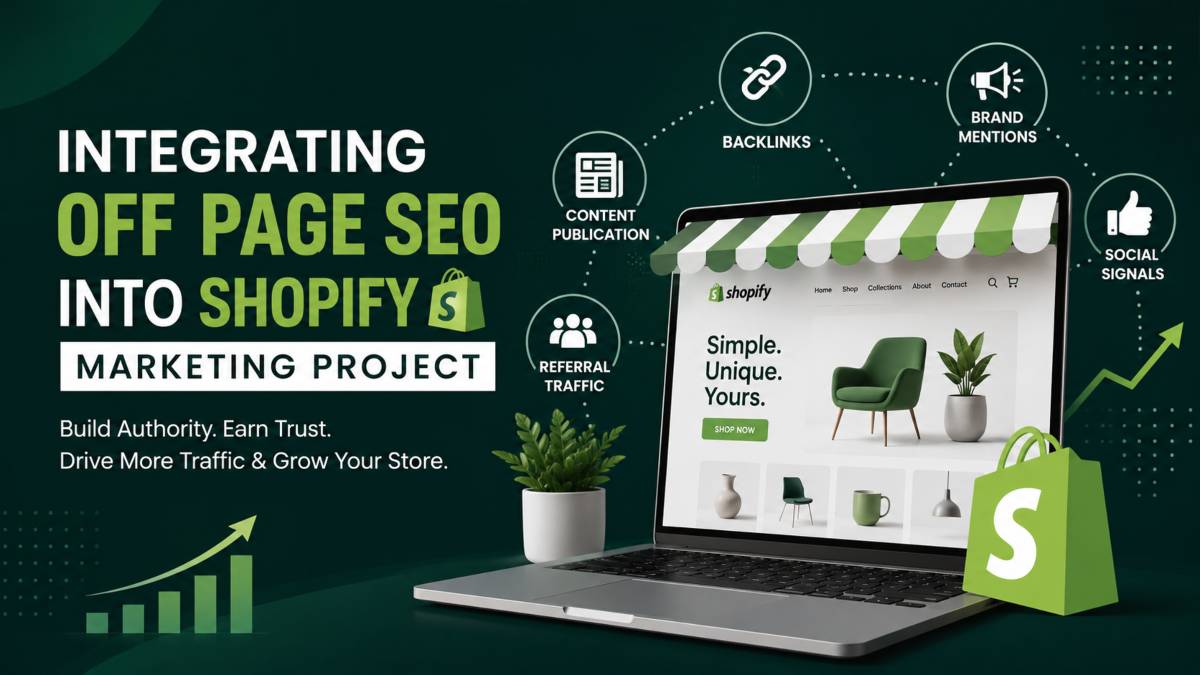
Backlinks act like votes of confidence. Mentions build awareness. Social activity keeps your brand visible. Together, these signals shape how your store is seen and how often it gets discovered.
Why Shopify Stores Need It
Shopify makes it easy to launch a store, which means competition is everywhere. Thousands of stores can sell similar products, often with similar layouts and pricing. Standing out takes more than a clean design.
Off page SEO helps your store rise above that noise. It builds authority, which improves how your pages rank in search results. Strong external signals tell search engines that your store deserves visibility.
It also brings in referral traffic. Visitors from blogs, directories, and social platforms arrive with interest already in place. These are not random clicks. They are people who are more likely to engage, explore, and buy.
Core Benefits of Off Page SEO for Shopify Growth
Stronger Domain Authority
Search engines look for signals that show whether a store can be trusted. One of the clearest signals comes from backlinks. When relevant and respected sites link to your Shopify store, it tells search engines that your content and products hold value.
These links act as trust markers. The more relevant the source, the stronger the signal. Over time, this builds domain authority, which makes it easier for your pages to rank. Instead of fighting for visibility, your store starts gaining ground with less resistance.
Increased Organic Traffic
As authority grows, rankings improve. Product pages and category pages begin to appear higher in search results, which leads to more organic traffic. This traffic is not random. It comes from people already searching for what you offer.
Better rankings also mean more consistent visibility. Instead of relying only on paid ads or short bursts of promotion, your store attracts visitors steadily through search.
Referral Traffic from External Sources
Off page SEO opens the door to traffic from beyond search engines. When your store is mentioned on blogs, listed in directories, or shared across social platforms, people arrive through those channels.
Referral traffic often carries higher intent. Visitors already trust the source that introduced them to your store. This makes them more likely to explore your products and take action.
Brand Visibility Beyond Your Store
A Shopify store should not exist in isolation. Off page SEO expands your presence across different platforms, making your brand easier to recognize.
Mentions across blogs, communities, and social spaces help your store stay visible even when people are not actively searching. Over time, this wider reach builds familiarity. And familiarity builds trust, which plays a key role in turning visitors into customers.
Key Off Page SEO Strategies for Shopify
Off page SEO works best when it is built on consistent action, not one off tactics. The goal is to place your store in the right spaces, earn attention from the right audiences, and build signals that search engines can trust. Each strategy plays a role, but together they create momentum that compounds over time.
Backlink Building That Actually Works
Not all backlinks carry the same weight. A handful of links from relevant and respected sites can do more than dozens of low quality ones. The focus should always be on relevance and credibility.
Guest posting is one of the most reliable methods. Writing for niche blogs connected to your products allows you to reach an audience that already has interest. It also earns you links that feel natural and earned.
PR outreach adds another layer. Pitching your products or brand story to online publications can lead to features that bring both traffic and authority. Industry directories also help, especially when they are trusted and closely related to your niche.
Local SEO for Shopify Stores
Even online stores can benefit from local presence. Optimizing your business listings helps your store appear in location based searches. This is especially useful if you serve a specific region or offer local delivery.
Accurate business information, updated hours, and clear images build trust at a glance. Reviews play a key role here as well. Encouraging customers to leave feedback and responding to it shows that your store is active and reliable.
Social Signals and Engagement
Social platforms act as distribution channels for your content and products. When people share your posts, interact with your brand, or visit your store through social links, it creates signals that extend your reach.
Consistent posting keeps your store visible. Engagement keeps it relevant. Replying to comments, joining conversations, and sharing useful content builds a connection with your audience. Over time, this turns casual viewers into repeat visitors.
Content Syndication and Distribution
Content should not live in one place. A blog post published on your Shopify store can be adapted and shared across multiple platforms. This includes forums, partner websites, and industry communities.
Repurposing content increases its lifespan. A single idea can reach different audiences in different formats. Each share creates another entry point to your store, bringing in traffic and strengthening your presence across the web.
Strategic Partnerships
Growth often comes from collaboration. Partnering with brands that serve a similar audience can open doors to new customers. These partnerships can take many forms, from co created content to shared promotions.
Cross promotion allows both sides to benefit. You gain exposure to a new audience while building links and mentions that support your SEO efforts. When done with the right partners, these relationships add both reach and credibility to your store.
How to Integrate Off Page SEO into Shopify Marketing
Off page SEO works best when it is not treated as a side task. It should sit inside your marketing flow, moving in sync with everything else you do. When outreach, content, and promotion connect, results start to build with more consistency and less guesswork.
Align with Your Marketing Calendar
Timing matters. If you are launching a new product or running a campaign, your off page efforts should move alongside it. Outreach to blogs, creators, and communities should happen as your content goes live, not weeks later.
Promoting content outside your store during these moments helps it gain traction faster. It creates early signals that support visibility and keeps your campaigns from relying only on internal traffic.
Use Shopify Data to Guide Strategy
Your store already holds valuable signals. Sales trends, top performing products, and popular pages all point to what your audience cares about. This data should guide your outreach.
If a product is performing well, it makes sense to push it further through external mentions and links. Keywords that bring traffic can also shape the topics you pitch to blogs or partners. This keeps your efforts focused and tied to real demand.
Combine SEO with Email and Social Campaigns
Off page SEO does not exist in isolation. It connects naturally with email and social activity. When you publish new content or secure a mention, share it across your channels.
Email can bring your existing audience back to your store. Social platforms can introduce your content to new users. Together, they amplify reach and create multiple paths for traffic to flow in. The more touchpoints you create, the stronger your presence becomes.
Use Tools to Manage and Track Links
Tracking progress keeps your strategy grounded. You need to know which links are driving traffic, which sources are valuable, and where adjustments are needed.
Tools like Google Search Console help you monitor backlinks and see how your store performs in search. Shopify reports can show how referral traffic behaves once it arrives.
When you review this data regularly, patterns start to appear. You can focus on what works, refine your outreach, and build a system that improves over time rather than relying on guesswork.
Measuring Off Page SEO Performance
Off page SEO is not guesswork. If you are building links, earning mentions, and pushing your store into new spaces, you need to know what is actually moving the needle. Clear tracking turns effort into direction. Without it, you are just adding activity with no sense of progress.
Key Metrics to Track
Start with referral traffic. This shows how many visitors are arriving from external sources like blogs, directories, and social platforms. It gives you a direct view of which channels are sending real people to your store.
Backlink quality matters more than volume. Links from relevant and trusted sites carry far more weight than random ones. Keep an eye on where your links are coming from and how they connect to your niche.
Keyword rankings tell you how your store is performing in search. As your off page work builds trust, you should see gradual movement in rankings for your target terms.
Brand mentions are another signal worth tracking. Even when there is no direct link, mentions across platforms increase visibility and strengthen your presence.
Tools for Tracking Progress
Tools keep your data organized and easy to read. Google Search Console shows how your site performs in search and highlights new backlinks. It also helps you understand which pages are gaining traction.
The Shopify analytics dashboard gives insight into how visitors behave once they land on your store. You can see where they come from, how long they stay, and what actions they take.
Link tracking tools add another layer by helping you monitor backlink sources and changes over time. Together, these tools create a clear picture of your off page performance.
How to Adjust Based on Data
Data should guide your next move. When a certain type of link or platform brings strong traffic, invest more time there. Build on what already works instead of spreading your efforts too thin.
If you notice low quality links, take action to remove or disavow them. Poor links can weaken your progress and affect how your store is viewed.
Refining your outreach strategy is an ongoing process. Use your data to improve targeting, adjust messaging, and focus on sources that bring real value. Over time, this turns your off page SEO into a system that grows stronger with each cycle.
Common Mistakes in Shopify Off Page SEO
Off page SEO can build real momentum, but it can also stall fast when the approach lacks focus. Many Shopify stores fall into patterns that look productive on the surface but fail to deliver meaningful results. Avoiding these mistakes keeps your effort sharp and your progress steady.
Focusing on Quantity Over Quality
It is easy to think more links mean better results. In reality, a large number of weak links can do little for your store. Search engines look at the quality and context of each link, not just the count.
A few links from trusted, relevant sites can carry far more weight than dozens from unknown sources. The goal is to earn links that make sense for your niche and reflect real value.
Ignoring Relevance in Backlinks
Not every link is worth having. When links come from sites that have no connection to your products or audience, they lose impact. In some cases, they can even send mixed signals about your store.
Relevance keeps your profile strong. Links should come from spaces where your products naturally fit. This builds a clearer connection between your store and your audience.
Not Tracking Results
Without tracking, it is impossible to know what is working. Some stores invest time in outreach and link building but never review the outcome. This leads to repeated effort without improvement.
Monitoring traffic, rankings, and link sources helps you see where progress is happening. It also shows where adjustments are needed. Clear data keeps your strategy grounded.
Using Spammy Link Sources
Low quality link sources can harm more than they help. Buying links from questionable sites or using automated link schemes may seem like a shortcut, but it often leads to poor results.
Search engines are quick to spot unnatural patterns. A clean and honest approach builds trust over time. It may take longer, but it creates a stronger and more reliable foundation for growth.
Building a Sustainable Off Page SEO System
Off page SEO is not a one time push. It works best as a system that runs in the background of your marketing. Small actions, repeated over time, create a steady build in authority and visibility. The goal is not short bursts of activity, but a rhythm that keeps your store present across the web.
Consistent Outreach Efforts
Outreach should be part of your weekly routine, not something you revisit once in a while. Reaching out to blogs, creators, and relevant platforms keeps your store in circulation.
Consistency builds familiarity. The more often your brand appears in the right spaces, the more likely it is to earn links and mentions. Even a few focused outreach efforts each week can add up to strong results over time.
Long Term Relationship Building
Links are not just transactions. They often come from relationships. Building connections with writers, creators, and business owners in your niche opens doors that one time outreach cannot.
When relationships grow, opportunities follow. You may get featured more than once, collaborate on content, or take part in shared promotions. This adds depth to your off page efforts and creates a network that supports your growth.
Ongoing Content Promotion
Publishing content is only the first step. Promotion is what gives it reach. Each blog post, guide, or product update should be shared across multiple channels.
Repurposing content keeps it alive. A single piece can be adapted for social posts, community discussions, or partner platforms. This extends its lifespan and increases the chances of earning links and traffic.
Regular Performance Review
A strong system needs regular checks. Reviewing your data helps you understand what is working and what needs adjustment. Look at traffic sources, link quality, and how your pages perform in search.
These reviews keep your strategy focused. You can build on what brings results and refine what does not. Over time, this creates a system that grows stronger with each cycle, rather than one that stays stuck or loses direction.
Conclusion
Off page SEO is not a race to collect links. It is a steady process of building credibility beyond your store. Every mention, every link, every share adds another layer of trust that search engines and customers can see.
For Shopify stores, this trust makes the difference. It moves your brand from just another option to one that feels reliable and worth choosing. When your store shows up across the right spaces, people notice. When those signals stay consistent, they start to trust.
Growth comes from that combination. Visibility brings people in. Trust keeps them there and turns interest into action. When off page SEO is built into your marketing, your store is no longer working in isolation. It becomes part of a wider network that supports long term progress.