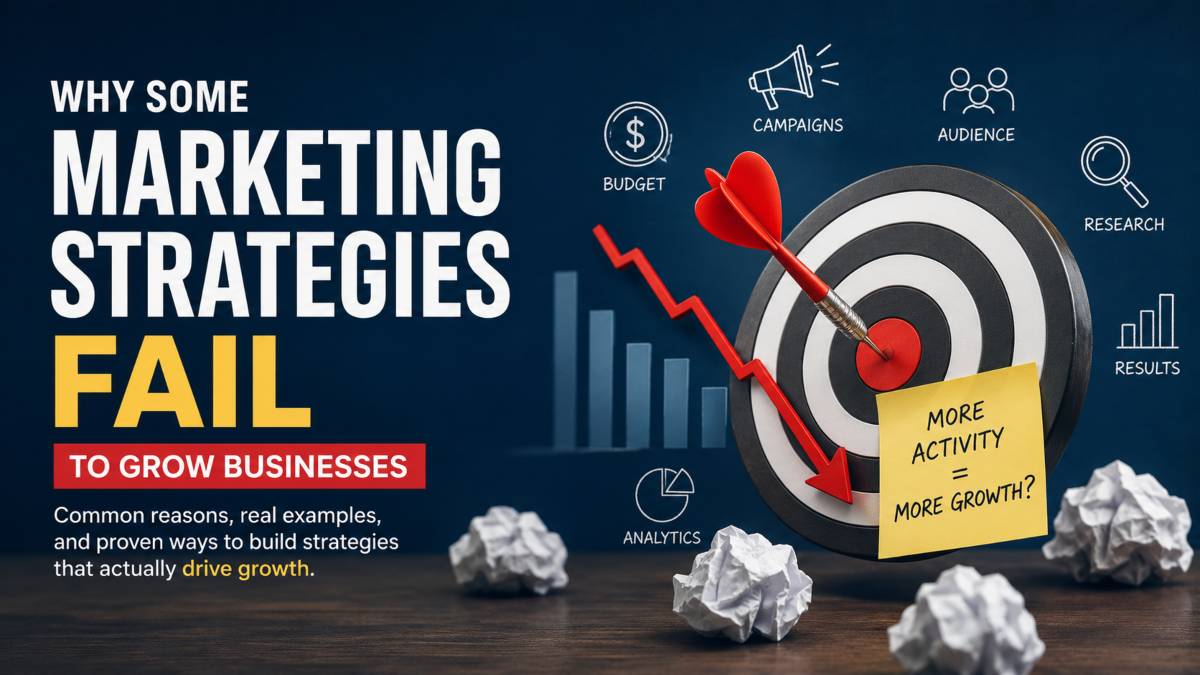
Businesses pour money into marketing every year, yet many still struggle to see real business growth. They launch flashy marketing campaigns, publish endless content, run paid ads across multiple platforms, and chase every new trend that appears online. Still, sales stay flat, leads remain weak, and customer engagement slowly fades. The problem is rarely a lack of effort. More often, the issue sits deeper inside the strategy itself.
Many companies focus heavily on activity while ignoring direction. They mistake visibility for progress and assume more campaigns automatically lead to better results. This is one of the biggest reasons why marketing strategies fail. A business can produce content every day and still miss its audience completely if the messaging lacks purpose or clarity.
Another common issue comes from weak customer understanding. When businesses fail to understand what people actually want, their marketing campaigns start feeling generic, disconnected, and forgettable. Customers respond to relevance, trust, and clear value, not noise.
Strong business growth happens when marketing decisions connect directly to customer needs, brand positioning, and measurable goals. Without that connection, even expensive campaigns can struggle to produce meaningful results.
What Makes a Marketing Strategy Fail?
Most marketing strategy problems do not begin with bad advertisements or weak social media posts. They usually start with a disconnect between business goals, audience expectations, and execution. A company may invest heavily in campaigns and still struggle because the overall direction lacks clarity. An ineffective marketing strategy often looks busy from the outside while producing very little meaningful growth behind the scenes.
Strategy Without Clear Business Goals
One of the biggest reasons marketing efforts collapse is the absence of clear objectives. Many businesses launch campaigns without defining what success actually means. Some want more traffic, others want brand awareness, while sales teams expect immediate revenue growth. Without alignment, marketing loses focus quickly.
Vague KPIs also create confusion. Tracking likes, impressions, or random engagement numbers may look impressive in reports, but those metrics do not always translate into real business growth strategy outcomes. Activity alone does not create momentum if it is disconnected from revenue, leads, or customer retention.
Confusing Tactics With Strategy
Another major issue comes from treating tactics as strategy. Posting on social media every day or running paid ads does not automatically create a structured growth plan. Tactics are simply tools. Strategy is the bigger framework guiding those actions toward measurable goals.
Businesses that rely on scattered marketing efforts often produce inconsistent messaging and disconnected customer experiences. Without a clear direction, campaigns become reactive instead of intentional, making it harder to build trust, loyalty, and long term growth.
Poor Audience Research Leads to Weak Results
Many cases of marketing campaign failure begin long before a campaign goes live. The real problem often starts with poor customer understanding. Businesses sometimes create messaging based on assumptions instead of real customer behavior, which causes a disconnect between the brand and the people it wants to reach. Without proper target audience analysis, even expensive campaigns can struggle to generate trust, engagement, or sales.
Ignoring Customer Pain Points
Customers pay attention when a brand speaks directly to their frustrations, needs, or goals. When businesses ignore audience pain points, their messaging feels generic and emotionally flat. Instead of creating relevance, the campaign blends into the background noise competing for attention online.
This weak connection usually leads to poor conversion rates. People may see the advertisement or content, but they do not feel understood enough to take action. Marketing works best when customers feel like a brand understands their situation better than anyone else.
Making Assumptions Instead of Using Data
Strong customer research removes guesswork from marketing decisions. Businesses that skip surveys, analytics, and behavioral insights often build campaigns around internal opinions rather than customer reality. That creates messaging that sounds good inside a meeting room but fails in the real market.
Analytics help reveal how people interact with content, what products attract attention, and where customers lose interest. Surveys and feedback provide direct insight into motivations and frustrations. Without this information, businesses risk wasting budget on messaging that misses the mark completely.
The Cost of Generic Messaging
Broad messaging rarely creates strong engagement because it tries to appeal to everyone at once. Customers respond to relevance and specificity. If a campaign feels too general, trust weakens quickly.
People want brands that understand their needs, language, and priorities. Businesses that fail to personalize communication often struggle to stand out in crowded markets, making growth much harder to achieve.
Weak Brand Positioning Makes Businesses Forgettable
One of the biggest reasons behind failed marketing strategies is weak brand positioning. Many businesses enter crowded markets and immediately start copying competitors instead of building a distinct identity. The result is predictable messaging, forgettable campaigns, and a brand that struggles to stay in customers’ minds. When every company sounds the same, customers usually choose based on price alone, which creates long term pressure on profit and growth.
Copying Competitors Instead of Building Identity
Brands lose their edge when they spend more time reacting to competitors than understanding what makes them different. Similar slogans, nearly identical visuals, and recycled messaging create confusion instead of recognition. Customers struggle to see why one company deserves attention over another.
This also creates a pricing problem. Without uniqueness, businesses often compete by lowering prices rather than building stronger value. That approach may attract short term attention, but it rarely builds loyalty or lasting trust.
Poor Value Proposition
A weak value proposition makes it difficult for customers to connect emotionally with a brand. People do not buy products alone. They buy solutions, experiences, identity, and confidence. If a company cannot clearly explain why it matters, customers quickly lose interest.
Strong brand positioning creates clarity. Customers should immediately understand what the business offers, who it serves, and why it feels different from alternatives in the market.
Real Example: New Coke
The New Coke launch remains one of the most famous examples of failed marketing strategies. Coca Cola changed its formula believing customers would prefer a sweeter taste. What the company underestimated was emotional attachment to the original product.
The backlash was not only about flavor. It reflected customer sentiment, nostalgia, and loyalty connected to the brand’s identity. The lesson was simple. Businesses that ignore emotional connection risk damaging trust, even when the product itself changes only slightly.
Unrealistic Expectations Kill Marketing Momentum
Many businesses abandon good marketing too early because they expect immediate results. They launch a campaign, wait a few weeks, and panic when sales do not explode overnight. This mindset creates serious marketing ROI problems because strong growth marketing usually takes consistency, testing, and patience. A long term marketing strategy is built through steady improvements, not instant wins.
Expecting Instant Results
Marketing is rarely a quick process. SEO takes time to build authority, content needs time to reach audiences, and brand awareness grows gradually through repeated exposure. Businesses that expect instant traction often become frustrated before campaigns have enough time to mature.
Customer trust also develops slowly. People usually interact with a brand multiple times before making a purchase decision. Companies that focus only on immediate returns often overlook the bigger process behind sustainable growth.
Quitting Campaigns Too Early
Some campaigns fail simply because businesses stop too soon. Without enough testing, it becomes impossible to understand what is actually working. A single advertisement, landing page, or email campaign may need several adjustments before producing strong results.
Incomplete data also creates misleading conclusions. If businesses make decisions too early, they risk shutting down campaigns that only needed optimization instead of replacement.
Chasing Trends Instead of Consistency
Reactive marketing creates unstable growth. Businesses often jump from one trend to another hoping for quick attention, but this scattered approach weakens long term brand identity. Audiences become confused when messaging constantly changes direction.
Consistency builds recognition, trust, and loyalty over time. While trends can create temporary spikes in attention, sustainable growth marketing usually comes from clear positioning, steady communication, and patience with the process.
No Measurement System Means No Improvement
Many businesses struggle with marketing ROI problems because they have no reliable way to measure performance. Campaigns are launched, budgets are spent, and content is published, yet nobody can clearly explain what is generating revenue and what is wasting resources. Without proper campaign performance metrics, marketing decisions become guesswork instead of informed strategy.
Tracking the Wrong Metrics
One of the most common mistakes is focusing on vanity metrics instead of business outcomes. High numbers of likes, views, or followers may look impressive on reports, but they do not always lead to sales or customer growth. A campaign can receive strong engagement online while producing almost no revenue.
Revenue focused metrics provide a clearer picture of performance. Businesses need to understand how marketing contributes to leads, conversions, retention, and profit rather than chasing surface level attention. When teams focus only on visibility, they often lose sight of actual business impact.
Why Dashboards and Analytics Matter
Strong analytics and dashboards help businesses understand how customers interact with campaigns across different channels. They reveal where traffic comes from, which content drives action, and where potential customers lose interest during the buying process.
This data allows businesses to make smarter adjustments over time. Instead of relying on assumptions, companies can refine messaging, shift budgets toward stronger channels, and improve weak areas based on real customer behavior. Data driven decisions usually outperform reactive marketing choices built on instinct alone.
Measuring ROI Correctly
Accurate ROI measurement requires more than checking revenue totals. Businesses need conversion tracking to understand which campaigns produce sales or leads. They also need to calculate customer acquisition cost to see how much it takes to gain each customer.
Lifetime value matters just as much. A campaign may appear expensive at first, but if those customers stay loyal and continue purchasing over time, the long term return becomes far more valuable. Businesses that understand these numbers can make better marketing decisions with greater confidence.
Budget and Internal Support Problems
Even strong ideas can fail when businesses refuse to support them properly. Many companies expect major results from minimal investment, creating pressure on teams to deliver rapid growth with limited resources. This disconnect often leads to business growth marketing mistakes that damage both campaign performance and long term strategy.
Underfunded Marketing Campaigns
One of the biggest problems in marketing budget allocation is unrealistic spending expectations. Businesses sometimes assume a small advertising budget can compete against larger brands with stronger visibility and more resources. While creativity matters, limited funding still affects reach, content quality, testing opportunities, and campaign consistency.
Underfunded campaigns also reduce flexibility. Teams cannot properly test audiences, improve creative assets, or expand successful campaigns when budgets remain too tight. As a result, businesses may incorrectly assume the strategy itself failed when the real issue was insufficient support behind execution.
Lack of Leadership Support
Marketing struggles when departments operate separately instead of working toward shared goals. Leadership teams may expect revenue growth while failing to align sales, customer service, and marketing around the same strategy. This creates inconsistent messaging and disconnected customer experiences.
Siloed marketing teams often lack the authority or collaboration needed to execute campaigns properly. Sales teams may ignore marketing insights, while executives push for quick results without understanding the timeline required for sustainable growth.
Successful marketing requires more than creative campaigns. It depends on internal alignment, realistic expectations, and consistent support across the entire business. Without that foundation, even well planned strategies can lose momentum quickly.
How Businesses Can Build Marketing Strategies That Actually Work
Businesses rarely grow through random marketing activity alone. Real momentum comes from structure, consistency, and a deep understanding of customers. An effective marketing strategy connects every campaign, message, and decision to a larger business goal. Instead of chasing short bursts of attention, successful brands build systems designed for long term growth and measurable results.
Start With Clear Goals
Every strong business growth strategy begins with clarity. Companies need to define what success actually looks like before launching campaigns. Some businesses focus on revenue targets, while others care more about lead generation or brand awareness during early growth stages.
Clear goals help teams make smarter decisions about budget, messaging, and channel selection. They also prevent marketing from becoming scattered and reactive. When everyone understands the objective, campaigns become more focused and easier to measure over time.
Invest in Customer Research
Customer understanding sits at the center of every successful conversion strategy. Businesses should regularly collect insight through interviews, surveys, analytics, and customer feedback. This information helps reveal what customers value, what frustrates them, and what influences purchasing decisions.
Feedback loops are especially valuable because they create ongoing learning instead of one time assumptions. Customer behavior changes over time, and businesses that continue listening are more likely to adapt successfully.
Build a Consistent Brand Position
Strong brands communicate with clarity and consistency. Customers should quickly understand what the business stands for, who it serves, and why it feels different from competitors. Confusing or inconsistent messaging weakens trust and reduces recognition.
A unique value proposition gives customers a reason to remember the brand. Businesses that focus on originality instead of imitation usually build stronger emotional connections with their audience.
Use Data to Improve Campaigns
Marketing improves through testing, refinement, and continuous optimization. Successful companies treat campaigns as evolving systems rather than fixed ideas. They monitor performance, identify weak areas, and adjust strategies based on real customer behavior.
Analytics help businesses understand which channels produce the best results and where opportunities exist for improvement. Small adjustments made consistently over time often create stronger long term growth than dramatic short term changes.
Final Thoughts
Understanding why marketing strategies fail becomes much easier when businesses stop focusing only on activity and start paying attention to outcomes. Publishing more content, running extra ads, or chasing every new platform does not automatically create business growth. Without clear goals, strong customer understanding, consistent positioning, and measurable performance, even large campaigns can struggle to produce meaningful results.
Many failed marketing campaigns share the same pattern. They rely on assumptions instead of research, short term reactions instead of long term planning, and surface level metrics instead of real business impact. Growth rarely comes from random effort. It comes from alignment between strategy, audience needs, and execution.
Businesses that succeed in marketing usually stay patient with the process. They listen to customers, refine campaigns over time, and make decisions based on data rather than guesswork. Strong marketing is not about being everywhere at once. It is about delivering the right message to the right audience with consistency and purpose.