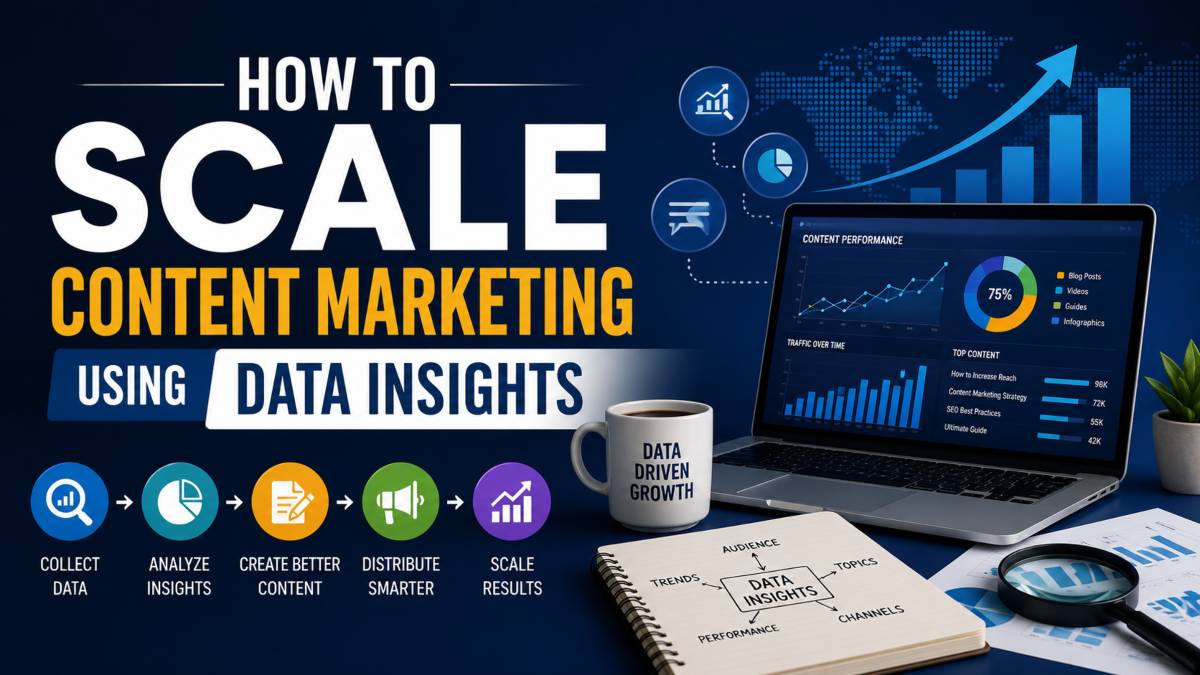
Publishing more blog posts used to feel like the answer to growth. More articles meant more chances to rank, more traffic, and more visibility. That approach no longer works on its own. Brands now compete in crowded search results where volume means very little without strategy, audience understanding, and measurable performance.
Many businesses try to scale content marketing by increasing production speed, but quickly run into the same problems. Traffic becomes inconsistent, conversions stay weak, teams burn out, and reporting turns into a guessing game with unclear ROI. Content starts piling up while results remain flat.
This is where data driven content marketing changes the equation. Instead of relying on assumptions, businesses can use content marketing analytics to understand what audiences actually search for, which topics convert, what channels drive engagement, and where content gaps exist.
Data creates direction. It helps marketers build smarter content plans, improve search visibility, and focus resources on formats that already prove they can perform. Analytics also reveal what should be updated, repurposed, expanded, or removed completely.
The brands that scale content marketing successfully are not always the ones publishing the most. They are usually the ones making better decisions with the data already sitting in front of them.
What Scaling Content Marketing Really Means
Scaling content marketing is often misunderstood. Many businesses assume it simply means publishing more blog posts, videos, newsletters, or social content every week. In reality, scaling is about increasing output while still keeping quality, consistency, and business results intact.
A larger content library means very little if the content fails to attract the right audience or convert readers into customers. Real growth happens when content production becomes more strategic, repeatable, and connected to measurable goals.
Scaling Content Without Losing Quality
One of the biggest mistakes brands make is sacrificing quality for speed. Publishing five rushed articles rarely performs better than publishing one strong piece built around audience needs and search intent.
Quality content usually shares a few common traits:
- Clear structure
- Useful information
- Strong search relevance
- Audience focused writing
- Consistent brand voice
As businesses scale content marketing, maintaining editorial standards becomes essential. This is why many successful teams create templates, workflows, SEO guidelines, and review systems that keep content consistent across larger publishing schedules.
Why Volume Alone Does Not Work
More content does not automatically create more traffic or conversions. In many cases, random publishing creates clutter instead of growth.
For example, a company might publish dozens of articles every month but still struggle with low engagement because the topics lack search demand or fail to match audience intent. Without strategy, scaling turns into noise.
Search engines and readers both reward relevance. Businesses that focus only on quantity often waste time producing content that never ranks, converts, or supports revenue goals.
The Role of Data in Sustainable Content Growth
This is where data becomes the foundation of scalable content strategy. Analytics help businesses understand what content performs best, which keywords attract qualified traffic, and what topics audiences actually care about.
Data also reveals patterns that improve future planning. A brand may discover that educational guides consistently drive more leads than opinion pieces, or that certain channels generate stronger engagement than others.
Instead of guessing what to publish next, businesses can use performance insights to create content with a clearer purpose. This approach makes scaling more sustainable because every new piece is backed by audience behavior, search trends, and measurable results.
Why Data Insights Matter in Content Marketing
Content marketing becomes far more reliable when decisions are backed by real performance data instead of assumptions. Without analytics, businesses often publish content based on trends, personal opinions, or random ideas that may never connect with their audience. This creates wasted effort, inconsistent growth, and weak returns.
Data changes that process completely. It gives marketers a clearer understanding of what works, what fails, and where future opportunities exist.
Removing Guesswork From Content Decisions
One of the biggest advantages of analytics based content marketing is clarity. Instead of guessing which topics might perform well, businesses can use search data, engagement reports, and keyword trends to guide their strategy.
For example, imagine two companies publishing content in the same industry. One posts random articles every week based on brainstorming sessions alone. The other studies search demand, audience questions, and content marketing metrics before creating each piece.
The difference becomes obvious over time. The data focused company usually attracts stronger traffic, higher engagement, and more qualified leads because its content matches actual audience intent.
Data helps businesses answer practical questions such as:
- Which topics drive the most organic traffic?
- What content converts readers into leads?
- Which formats keep users engaged longer?
- What channels produce the best results?
This removes uncertainty from content planning and creates a more focused publishing strategy.
Understanding Audience Behavior
Audience behavior data reveals how people interact with content across websites, email campaigns, and social platforms. Businesses can track how long users stay on a page, what they click, where they leave, and which topics attract repeat visitors.
This information helps marketers understand what audiences truly care about instead of relying on assumptions. A company may discover that beginner guides outperform advanced industry commentary or that short educational videos attract stronger engagement than long form opinion posts.
These insights help businesses create content that feels more relevant and useful to readers.
Connecting Content to Revenue Goals
Traffic alone does not guarantee business growth. A page with thousands of visitors still holds little value if it produces no leads, sales, or customer action.
Content performance analysis helps businesses connect content directly to measurable goals such as conversions, email signups, demo requests, or product purchases. This makes it easier to identify which topics and formats contribute to revenue rather than vanity metrics.
When content strategy connects with business goals, scaling becomes more sustainable and financially meaningful.
Improving ROI With Performance Data
Performance tracking allows businesses to improve content ROI over time. Instead of creating new content endlessly, marketers can identify existing pages worth updating, expanding, or repurposing.
For example, a blog post already ranking on page two of search results may need only minor SEO improvements to generate significantly more traffic. A high performing webinar could become email content, social posts, short videos, or downloadable guides.
Using performance data this way helps businesses get more value from every piece of content while reducing unnecessary production work.
How to Scale Content Marketing Using Data Insights Step by Step
Scaling content marketing successfully requires more than publishing faster or hiring more writers. Sustainable growth comes from building a system where every decision is guided by audience behavior, search demand, and measurable performance. Data helps businesses create content with purpose instead of filling calendars with random topics.
The following framework shows how brands can scale content production while keeping quality, SEO performance, and business goals connected.
Tie Content Goals to Business Objectives
The first step is defining what success actually looks like. Many content teams focus heavily on traffic numbers while ignoring whether content contributes to revenue, leads, or customer growth.
Businesses should connect content efforts to clear goals such as:
- Brand awareness
- Lead generation
- Product signups
- Customer retention
- Sales growth
Once goals are defined, teams can choose content marketing metrics that reflect meaningful progress. For example, an ecommerce business may focus on conversion rates and product page visits, while a SaaS company may track demo requests and free trial signups.
This creates direction and prevents teams from chasing vanity numbers that add little business value.
Audit Existing Content Performance
Before creating more content, businesses should review what already exists. A content audit helps identify pages that generate strong traffic, engagement, backlinks, or conversions.
At the same time, it reveals underperforming pages that may need updates, consolidation, or removal.
Useful areas to review include:
- Organic traffic
- Bounce rates
- Time on page
- Conversion performance
- Keyword rankings
- Backlink strength
For example, a company may discover that practical tutorials consistently outperform news style articles. That insight becomes a clear signal for future content planning.
Content performance analysis helps businesses stop wasting effort on weak topics while expanding formats that already produce results.
Study Audience Behavior and Search Intent
Strong content strategies are built around audience needs, not assumptions. Businesses should use analytics tools, CRM data, surveys, social comments, and search trends to understand what people actually want.
Audience behavior data helps answer questions such as:
- What problems are customers trying to solve?
- What stage of the buying journey are they in?
- What content formats hold their attention?
- What topics drive conversions?
Search intent also matters heavily when scaling SEO content. Someone searching for “best email marketing tools” expects comparisons and recommendations, while a user searching “how email automation works” wants educational content.
Matching content format with search intent improves rankings, engagement, and conversion potential.
Use Keyword Research to Build Topic Clusters
Keyword research creates structure for scalable content production. Instead of publishing disconnected articles, businesses can organize content around core themes using pillar pages and supporting cluster content.
For example, a brand focused on SEO could build a pillar page around “content marketing strategy” and support it with related articles about:
- Keyword research
- Content audits
- Search intent
- Internal linking
- Content distribution
This structure strengthens topical authority and improves internal linking opportunities across the website.
Keyword intent analysis also helps businesses identify topics with realistic ranking potential and strong commercial value before investing production resources.
Find Content Gaps and Competitor Weaknesses
Competitor analysis helps businesses uncover opportunities hidden inside search results. Instead of copying competitors directly, smart brands look for missing angles, weak explanations, outdated information, or overlooked audience questions.
Content gaps often appear when:
- Search demand exists but quality content is limited
- Competitors ignore beginner topics
- Emerging trends lack strong coverage
- Existing articles fail to answer search intent fully
For example, if competitors publish generic marketing advice but ignore practical case studies, that gap creates an opportunity to attract readers looking for real examples.
Scaling becomes much easier when businesses focus on underserved topics rather than entering overcrowded battles unnecessarily.
Build Repeatable Content Production Systems
As publishing volume increases, workflows become just as important as creativity. Businesses that scale content efficiently usually rely on standardized systems that keep quality consistent.
This may include:
- SEO content briefs
- Writing templates
- Editorial guidelines
- Approval workflows
- Publishing checklists
- Performance review systems
Repeatable workflows reduce production delays and make collaboration easier across writers, editors, designers, and SEO teams.
Data also helps businesses improve operational efficiency. Tracking production timelines can reveal bottlenecks slowing down publishing schedules or approval processes.
Repurpose and Distribute Content Strategically
Strong content should rarely live in one format only. Repurposing allows businesses to expand reach without starting from scratch every time.
A single blog article can become:
- LinkedIn posts
- Email newsletters
- Short videos
- Infographics
- Webinar talking points
- Social media threads
Distribution data also reveals which channels perform best for different types of content. Some audiences may respond strongly to email campaigns, while others engage more through organic search or social platforms.
This approach allows businesses to scale visibility without multiplying production work unnecessarily.
Track Results and Optimize Continuously
Content scaling is an ongoing process, not a one time project. Businesses should review analytics regularly to understand what improves performance and what weakens results over time.
Important areas to monitor include:
- Organic traffic growth
- Keyword rankings
- Conversion rates
- Engagement levels
- Content ROI
- Lead quality
- Assisted conversions
Optimization should become part of the workflow. Older articles may need refreshed statistics, stronger SEO structure, updated keywords, or clearer calls to action.
The most successful brands treat content marketing as a feedback system where every performance insight improves the next publishing cycle.
Tie Content Goals to Business Objectives
One of the biggest reasons content strategies fail is the lack of clear business direction. Many brands publish articles consistently but never define what the content is supposed to achieve. Traffic may increase, but conversions, leads, and revenue remain stagnant because the strategy was never connected to measurable outcomes.
Scaling content marketing becomes much easier when every piece of content supports a specific business objective.
Brand Awareness
Some businesses create content primarily to increase visibility and reach new audiences. In this case, the focus is usually on educational blog posts, search visibility, social engagement, and topical authority.
Useful content marketing KPIs for brand awareness include:
- Organic traffic
- Impressions
- Social shares
- Brand search growth
- Backlinks
For example, a startup entering a competitive market may publish beginner guides and industry explainers to build recognition before pushing heavily for conversions.
Lead Generation
For many companies, content exists to attract qualified leads. This often includes downloadable guides, webinars, email signups, and SEO focused landing pages designed to capture user interest.
Conversion focused content becomes especially important at this stage. Businesses should monitor:
- Form submissions
- Email subscribers
- Demo requests
- Free trial signups
- Lead quality
A high traffic article means very little if readers never take action after visiting the page.
Customer Retention
Content is not only for attracting new visitors. Existing customers also need education, support, and engagement after purchase.
Retention focused content may include:
- Product tutorials
- Knowledge base articles
- Customer newsletters
- Advanced strategy guides
- Community content
Strong retention content helps businesses improve customer satisfaction while reducing churn over time.
Revenue Growth
As content operations scale, revenue should remain one of the clearest performance indicators. Businesses need to understand which content contributes directly or indirectly to sales growth.
This may include tracking:
- Assisted conversions
- Sales influenced by content
- Customer acquisition cost
- Revenue per lead
- Content ROI
When content connects directly with business performance, teams can scale with far more confidence and direction.
Choose KPIs That Match the Goal
Not every metric matters equally. A common mistake in content marketing is tracking every available number without understanding what actually supports business growth.
The best content marketing KPIs are the ones tied closely to real business outcomes. Choosing focused metrics keeps reporting cleaner and helps teams make smarter strategic decisions as content production grows.
Audit Existing Content Performance
Before scaling content production, businesses need to understand what is already working and what is quietly wasting resources. A proper content audit strategy helps teams identify successful content patterns, uncover weak pages, and make smarter publishing decisions moving forward.
Without this step, businesses often continue producing content blindly while ignoring valuable insights hidden inside existing performance data.
Identify High Performing Pages
The first step in content performance analysis is finding pages that already attract strong results. These are the articles, guides, videos, or landing pages that consistently generate traffic, engagement, backlinks, or conversions.
Businesses should look for content that performs well in areas such as:
- Organic traffic
- Keyword rankings
- Conversion rates
- Social engagement
- Backlinks
- Time on page
For example, a company may notice that practical tutorials attract far more traffic and leads than opinion based articles. That pattern becomes a useful signal for future content planning.
High performing pages also reveal what audiences already trust and respond to.
Find Low Performing Content
Not every published piece deserves to stay untouched forever. Some articles attract little traffic, rank poorly, or fail to convert visitors into leads or customers.
Low performing content often includes:
- Outdated information
- Weak keyword targeting
- Thin content
- Poor search intent matching
- Duplicate topic coverage
Instead of letting these pages sit unnoticed, businesses should decide whether to improve, merge, redirect, or remove them completely.
Cleaning up weak content can strengthen overall site quality and improve SEO performance across the website.
Analyze Traffic Patterns
Traffic analysis helps businesses understand how visitors discover and interact with content. This includes identifying:
- Top traffic sources
- Seasonal trends
- Pages with declining visits
- High bounce rate content
- Strong conversion pathways
For example, a business may discover that certain blog categories attract large amounts of search traffic but produce almost no conversions. Another section may generate fewer visitors but stronger lead quality.
These insights help businesses focus on traffic that actually supports business goals rather than vanity numbers alone.
Review Backlink Performance
Backlinks remain a strong SEO signal, making backlink analysis an important part of any content audit strategy.
Businesses should identify:
- Pages earning natural backlinks
- Content with strong authority signals
- Topics attracting industry references
- Link opportunities competitors already own
A guide earning backlinks consistently may deserve updates, expansion, or repurposing into additional formats because it already holds search authority.
Look for Content Refresh Opportunities
Many businesses focus too heavily on creating new content while ignoring existing assets that already hold ranking potential.
Refreshing older content can often produce faster SEO gains than publishing entirely new articles. Updates may include:
- New statistics
- Improved keyword targeting
- Better internal linking
- Updated examples
- Stronger calls to action
- Improved formatting
A blog post sitting near the bottom of page one or top of page two in search results may only need small improvements to attract significantly more traffic.
Regular content performance analysis keeps content libraries healthier, more organized, and far easier to scale strategically.
Study Audience Behavior and Search Intent
Content performs better when businesses understand who they are speaking to and what those people actually want. Publishing without audience research often leads to articles that attract weak traffic, low engagement, or visitors who never convert.
Audience behavior data helps marketers move past assumptions and create content based on real customer actions, interests, and search habits.
Use Analytics Data to Understand Engagement
Analytics platforms reveal how users interact with content after landing on a website. Businesses can track:
- Time on page
- Scroll depth
- Bounce rates
- Exit pages
- Conversion paths
- Returning visitor behavior
These insights show which topics hold attention and which pages lose users quickly.
For example, if visitors consistently leave a page after a few seconds, the content may not match search intent or answer the user’s question clearly enough. On the other hand, pages with strong engagement often reveal topics worth expanding further.
Collect Feedback Through Surveys
Surveys provide direct audience input that analytics alone cannot always explain. Businesses can ask customers:
- What problems they struggle with most
- What content they want more of
- Which platforms they use regularly
- What influences buying decisions
Even simple surveys can reveal useful patterns. A company may assume audiences want advanced technical content while survey responses reveal stronger interest in beginner guides and practical tutorials.
This feedback helps shape future content around real audience preferences instead of internal assumptions.
Use CRM Insights for Better Targeting
CRM platforms contain valuable customer information that many content teams overlook. Sales conversations, support tickets, customer objections, and purchase history can all reveal recurring themes and pain points.
These insights help businesses create content tailored to specific buyer needs and stages of the customer journey.
For example:
- New visitors may need educational awareness content
- Interested prospects may want product comparisons
- Existing customers may need tutorials or strategy guides
Using CRM insights this way creates more personalized and conversion focused content experiences.
Analyze Search Behavior Carefully
Search behavior reveals how people phrase their questions, what problems they want solved, and how urgently they need answers.
Search intent optimization means matching content format with the reason behind the search query.
Common search intent categories include:
- Informational searches
- Comparison searches
- Transactional searches
- Navigational searches
For example, someone searching “what is content marketing analytics” expects educational content, while a user searching “best content analytics tools” is likely comparing solutions before making a decision.
Matching content with intent improves both SEO performance and user satisfaction.
Map Content to Buyer Journey Stages
Different audiences need different types of content depending on where they are in the buying process.
A simple structure often looks like this:
- Awareness stage focuses on education and problem identification
- Consideration stage focuses on comparisons and solutions
- Decision stage focuses on trust, proof, and conversion
Businesses that understand audience behavior data and buyer intent can create content that feels more relevant at every stage of the customer journey.
Use Keyword Research to Build Scalable Topic Clusters
Keyword research becomes far more powerful when it is used to build structure instead of isolated blog posts. Businesses that scale content successfully usually organize topics into connected content ecosystems rather than publishing random articles with no relationship to each other.
This approach strengthens SEO visibility, improves user navigation, and makes long term content planning much easier.
Build Pillar Pages Around Core Topics
A pillar page acts as the central resource for a broad subject. Instead of targeting dozens of unrelated keywords separately, businesses create one comprehensive page covering a major topic in depth.
For example, a company focused on digital marketing might create a pillar page around “content marketing strategy.” That page can then connect to supporting articles covering narrower subjects such as:
- Keyword research
- Content audits
- SEO writing
- Content distribution
- Analytics tracking
This structure helps search engines understand the relationship between topics across the website.
Strong pillar pages also keep users engaged longer because readers can move naturally between related pieces of content.
Create Supporting Content Strategically
Supporting content focuses on more specific keywords and user questions connected to the main pillar topic. These articles allow businesses to target long tail searches while building deeper topical coverage.
For example, instead of publishing one broad article about SEO, businesses can create supporting content around:
- SEO content planning
- Search intent optimization
- Internal linking strategies
- Technical SEO basics
- Keyword intent analysis
This creates more ranking opportunities across search engines while keeping content organized under clear topic categories.
Build Topical Authority Over Time
Search engines reward websites that demonstrate consistent expertise around a subject. This is known as topical authority.
When businesses publish multiple high quality articles connected to the same subject area, they send stronger relevance signals to search engines. Over time, this increases trust, visibility, and ranking potential.
Pillar pages and topic clusters help businesses build authority gradually without relying on scattered publishing strategies.
Instead of chasing every trending keyword, companies focus on owning a specific topic category through consistent coverage and strategic linking.
Use Internal Linking to Strengthen SEO
Internal linking plays a major role in scalable content systems. Each supporting article should connect naturally back to the main pillar page while also linking to related supporting content where relevant.
This creates several benefits:
- Better website navigation
- Stronger search engine crawling
- Improved user engagement
- More page authority distribution
- Clear topic relationships
For example, a guide about keyword intent analysis may link naturally to articles about content optimization, search behavior, and SEO planning.
Strong internal linking turns separate articles into a connected knowledge system rather than isolated pieces competing for attention.
Using pillar pages and topic clusters creates a more scalable SEO structure because every new article strengthens the authority of the broader topic instead of operating alone.
Find Content Gaps and Competitor Weaknesses
Scaling content successfully is not just about creating more articles. It is also about finding opportunities competitors have ignored or handled poorly. Businesses that study search results carefully can uncover gaps that lead to stronger rankings, better engagement, and faster content growth.
This process helps brands build a scalable content strategy based on opportunity instead of random publishing.
Use SERP Analysis to Understand Search Competition
SERP analysis helps businesses evaluate what already ranks for target keywords and why those pages perform well.
When reviewing search results, businesses should examine:
- Content format
- Search intent alignment
- Article depth
- Keyword usage
- User experience
- Featured snippets
- Internal linking structure
For example, if the top ranking pages for a keyword are all beginner guides, publishing a highly technical article may struggle because it does not match audience expectations.
SERP analysis also reveals weak spots in competing content. Some pages may rank well despite outdated information, poor formatting, weak examples, or shallow explanations. These weaknesses create opportunities for stronger content to enter the search results.
Perform Competitor Content Audits
Competitor content analysis helps businesses identify patterns across successful brands in the same industry.
Useful questions to explore include:
- Which topics generate strong engagement?
- What keywords do competitors rank for?
- Which content formats perform best?
- Where are competitors missing detail or clarity?
- What questions remain unanswered?
For example, a competitor may rank strongly for broad educational topics but ignore comparison guides or practical case studies. That gap can become a valuable opportunity for targeted content creation.
The goal is not to copy competitors directly. The goal is to understand where stronger, more useful, or more focused content can outperform them.
Watch Emerging Trends Early
Businesses that identify trends before they become saturated often gain a major SEO advantage. Emerging topics usually have lower competition and stronger opportunities for visibility.
Trend monitoring can include:
- Industry news
- Search trend tools
- Social conversations
- Customer questions
- Forum discussions
- Product related changes
For example, a marketing agency noticing increased discussions around AI search optimization could begin publishing educational content before the topic becomes overcrowded.
Early content often has more time to build authority and backlinks before competition increases significantly.
Look for White Space Opportunities
White space opportunities appear when audience demand exists but strong content coverage remains limited.
This may happen when:
- Competitors ignore beginner audiences
- Search results lack updated information
- Certain formats are missing completely
- Niche questions remain unanswered
- Industry content feels overly generic
For example, if every competitor publishes theory heavy articles but few provide practical frameworks or templates, that becomes a clear content opportunity.
Businesses that identify white space can scale faster because they spend less time competing in overcrowded search areas and more time creating content audiences actually struggle to find elsewhere.
Strong competitor content analysis helps businesses publish with more precision, reduce wasted effort, and build a scalable content strategy around realistic opportunities instead of guesswork.
Build Repeatable Content Production Systems
Content marketing becomes difficult to scale when every article depends entirely on manual coordination and last minute decisions. As publishing volume increases, businesses need structured systems that keep production organized, consistent, and efficient.
Repeatable workflows help teams create content faster without sacrificing quality or losing strategic focus.
Create Detailed Content Briefs
Strong content production usually starts with a clear brief. Instead of giving writers vague topics, businesses should provide structured instructions that define:
- Target keywords
- Search intent
- Audience profile
- Recommended headings
- Internal linking opportunities
- Tone guidelines
- Conversion goals
Clear briefs reduce confusion and improve consistency across larger publishing schedules.
For example, a well prepared SEO brief helps writers understand exactly what the content needs to achieve before drafting begins. This reduces revisions and keeps content aligned with broader business goals.
Build Editorial Workflows
As content teams grow, editorial workflows become essential for keeping projects organized. Without clear processes, deadlines slip, approvals slow down, and publishing quality becomes inconsistent.
A basic workflow may include:
- Topic research
- Brief creation
- Writing
- Editing
- SEO review
- Design support
- Final approval
- Publishing
- Performance tracking
Structured workflows also make collaboration easier between writers, editors, SEO specialists, designers, and marketing managers.
Many businesses use content workflow automation tools to track progress and reduce repetitive administrative work during production.
Use Templates to Increase Efficiency
Templates help businesses scale content faster because teams do not need to rebuild structure from scratch every time.
Useful templates may include:
- Blog outlines
- SEO briefs
- Meta description formats
- Case study structures
- Email promotion drafts
- Content update checklists
Templates improve consistency while saving time across recurring tasks.
For example, using standardized article structures can help maintain readability and SEO quality even when multiple writers contribute to the same website.
Improve Collaboration Across Teams
Content production often involves multiple departments beyond marketing alone. Sales teams, customer support staff, SEO specialists, and product managers may all contribute valuable input.
Strong collaboration systems keep communication organized and prevent delays caused by scattered feedback or unclear responsibilities.
Businesses should define:
- Who creates briefs
- Who approves content
- Who handles SEO reviews
- Who manages publishing schedules
- Who monitors performance data
Clear ownership helps teams move faster while reducing confusion.
Simplify Approval Processes
Approval bottlenecks can slow content scaling significantly. Businesses should create streamlined review systems that keep content moving without excessive delays.
This may include:
- Standard revision rounds
- Defined approval timelines
- Shared editorial guidelines
- Pre approved SEO standards
- Automated notifications
Efficient approval systems reduce production friction and help businesses publish consistently.
The brands that scale content successfully usually treat content creation like an operational system rather than a collection of isolated creative tasks. Strong content scaling strategies depend on processes that are structured enough to grow while remaining flexible enough to improve over time.
Repurpose and Distribute Content Strategically
Creating strong content is only half the process. Distribution determines how far that content travels and how much value businesses extract from each piece. Many brands spend hours producing articles, videos, or reports only to promote them once before moving on to the next project.
A smarter approach focuses on repurposing and multi channel distribution so content continues attracting traffic, engagement, and conversions long after publication.
Use Multiple Content Distribution Channels
Different audiences consume content in different ways. Some prefer blog articles, while others spend more time on email newsletters, LinkedIn posts, videos, or podcasts.
Businesses should distribute content across several content distribution channels instead of relying on search traffic alone.
Common distribution channels include:
- Organic search
- Email marketing
- YouTube
- Industry communities
- Social media platforms
- Newsletters
This increases visibility while reducing dependence on a single traffic source.
For example, a blog post ranking slowly in search results can still attract attention through email campaigns or social promotion during the early stages.
Turn One Piece Into Multiple Formats
Repurposing allows businesses to increase content output without constantly creating from scratch. A single high quality article can fuel multiple formats across different platforms.
For example, one long form guide can become:
- LinkedIn posts
- Email sequences
- Short form videos
- Carousel graphics
- Webinar talking points
- Infographics
- Podcast discussions
This approach extends content lifespan while reaching audiences who consume information differently.
Audience driven content marketing works best when businesses adapt content to match platform behavior instead of posting identical material everywhere.
Use Email Marketing to Maintain Audience Attention
Email remains one of the strongest distribution channels for long term audience engagement. Businesses can repurpose blog content into newsletters, educational sequences, product updates, or curated resource roundups.
Email distribution helps brands:
- Bring readers back to older content
- Increase repeat traffic
- Build subscriber loyalty
- Support lead nurturing
- Promote new content consistently
A strong email strategy keeps valuable content active long after its original publish date.
Adapt Content for LinkedIn and Professional Platforms
LinkedIn works especially well for educational insights, industry commentary, and professional storytelling.
Instead of sharing article links alone, businesses can:
- Extract strong statistics
- Turn key points into mini posts
- Share practical frameworks
- Post lessons from case studies
- Create short opinion summaries
This increases reach while encouraging direct engagement from professional audiences.
Use Short Form Video for Wider Reach
Short form video continues attracting strong engagement across digital platforms. Businesses can transform written content into quick educational clips, tutorials, explainers, or visual summaries.
Even simple videos covering:
- Key takeaways
- Quick tips
- Industry trends
- Common mistakes
- Process breakdowns
can help brands reach audiences who prefer visual content over long articles.
Build Repeatable Repurposing Frameworks
Scaling content becomes much easier when businesses develop repeatable repurposing systems. Instead of deciding manually how to reuse every piece, teams can follow predefined workflows.
For example:
- Every blog article becomes three LinkedIn posts
- Every webinar becomes short video clips
- Every research report becomes an email series
- Every case study becomes social proof content
This structure improves efficiency while helping businesses maintain consistent visibility across multiple platforms.
Strong distribution strategies allow brands to get more value from every piece of content instead of treating publishing as a one time event.
Track Results and Optimize Continuously
Scaling content marketing is not a one time project. Content performance changes constantly as search behavior, competition, algorithms, and audience interests evolve over time. Businesses that continue growing are usually the ones reviewing data regularly and improving content based on real performance signals.
Publishing alone is not enough. Ongoing optimization is what keeps content valuable and competitive.
Use Dashboards to Monitor Performance Clearly
Performance tracking becomes easier when businesses organize data into centralized dashboards. Instead of checking multiple platforms manually, dashboards provide a clearer overview of how content performs across traffic, engagement, SEO, and conversions.
Useful metrics to monitor include:
- Organic traffic
- Keyword rankings
- Conversion rates
- Bounce rates
- Scroll depth
- Engagement by channel
- Assisted conversions
- Content ROI
Performance tracking dashboards help teams identify trends quickly without wasting time digging through scattered reports.
For example, a sudden drop in traffic may signal ranking losses, outdated content, or shifting search intent. A spike in engagement may reveal topics worth expanding further.
Conduct Regular Performance Reviews
Content should be reviewed consistently instead of being published and forgotten. Regular performance reviews help businesses identify:
- Top performing pages
- Declining content
- Conversion opportunities
- Weak engagement patterns
- SEO improvements
Many businesses review content monthly or quarterly depending on publishing volume.
These reviews often reveal practical opportunities such as:
- Updating outdated statistics
- Improving headlines
- Strengthening internal links
- Expanding thin sections
- Improving calls to action
Small updates can sometimes produce major gains without creating entirely new content.
Build Optimization Cycles Into Your Workflow
Recurring content optimization should become part of the publishing process itself. Instead of treating optimization as occasional maintenance, businesses should create repeatable cycles for reviewing and improving existing assets.
A simple optimization cycle may include:
- Review analytics data
- Identify weak or declining pages
- Update content quality and SEO structure
- Refresh keywords and internal links
- Republish or redistribute content
- Monitor performance changes
This process keeps content libraries active and competitive over longer periods.
Create Reporting Systems That Support Decisions
Strong reporting systems help businesses connect content activity with real business outcomes. Instead of focusing only on traffic numbers, reports should explain how content contributes to leads, conversions, customer growth, or revenue.
Useful reporting systems often include:
- Monthly SEO reports
- Conversion tracking summaries
- Channel performance breakdowns
- Content ROI reviews
- Topic performance comparisons
Clear reporting makes it easier for teams and stakeholders to understand which strategies deserve more investment and which areas need adjustment.
The brands that scale content successfully are usually the ones treating optimization as an ongoing discipline rather than a final step after publishing.
Most Important Metrics to Track When Scaling Content
Scaling content marketing without tracking performance is like publishing in the dark. Businesses may increase output, but without the right metrics, it becomes difficult to understand what actually drives traffic, engagement, or revenue.
The goal is not to measure everything. The goal is to track the metrics that connect content activity with real business growth. Strong reporting helps businesses improve strategy, identify weak areas, and make smarter publishing decisions over time.
Traffic Metrics
Traffic metrics show how people discover and interact with content through search engines and other channels.
Organic Traffic
Organic traffic measures how many visitors arrive through unpaid search results. Consistent organic growth often signals that content is matching search intent and ranking for valuable keywords.
CTR
CTR, or click through rate, measures how often people click your page after seeing it in search results. A low CTR may suggest weak headlines or meta descriptions, even if rankings are strong.
Bounce Rate
Bounce rate shows how many users leave a page without taking another action. A high bounce rate may indicate that content does not match user expectations or lacks engagement.
Scroll Depth
Scroll depth tracks how far users move down a page. If readers leave halfway through an article consistently, the structure or content quality may need improvement.
Traffic metrics help businesses understand whether content attracts the right audience and keeps users interested long enough to engage further.
Engagement Metrics
Engagement metrics reveal how audiences interact with content after arriving on the page.
Time on Page
Time on page measures how long visitors stay on a piece of content. Longer reading times usually suggest stronger engagement and more useful information.
Shares
Content shares show whether audiences find a piece valuable enough to distribute across social platforms or communities. Highly shared content often expands brand reach organically.
Comments
Comments provide direct audience feedback and can reveal which topics generate discussion or emotional response.
Email Engagement
Email engagement includes open rates, click rates, and subscriber activity. These numbers help businesses understand whether content resonates with existing audiences beyond search traffic alone.
Strong engagement metrics usually indicate that content connects well with audience interests and expectations.
Conversion Metrics
Traffic and engagement matter, but conversions connect content directly to business performance.
Leads
Lead tracking measures how many visitors complete actions such as form submissions, demo requests, or newsletter signups after consuming content.
Assisted Conversions
Assisted conversions show when content contributes to a sale or lead indirectly during the customer journey. Not every conversion happens on the first visit, so this metric helps businesses understand content influence over time.
Revenue Attribution
Revenue attribution connects specific content pieces with sales performance. This helps businesses identify which topics and formats generate the strongest financial return.
Content ROI
Content ROI compares content costs with the revenue or business value generated from those efforts. This metric helps teams decide where future investment should go.
Tracking the right combination of traffic, engagement, and conversion metrics creates a clearer picture of how content supports growth at every stage of the customer journey.
Best Tools for Data Driven Content Marketing
The right tools can make content marketing far more organized, measurable, and scalable. Without analytics and reporting platforms, businesses often rely on assumptions instead of real performance data. That creates weak strategies, inconsistent traffic, and content decisions based on guesswork rather than evidence.
Data driven teams use specialized tools to understand audience behavior, monitor SEO performance, track conversions, and improve content strategy over time. The goal is not to collect endless data. The goal is to gather actionable insights that improve decision making and content ROI.
| Tool | Best For | Key Features |
|---|---|---|
| Google Analytics | Website analytics | Traffic tracking, engagement metrics, conversions |
| Google Search Console | SEO monitoring | Keyword rankings, CTR data, indexing insights |
| Ahrefs | SEO research | Backlinks, keyword analysis, competitor research |
| Semrush | Content planning | SEO audits, keyword tracking, content ideas |
| Hotjar | User behavior analysis | Heatmaps, session recordings, visitor behavior |
| Looker Studio | Reporting dashboards | Visual analytics and custom reporting |
Google Analytics
Google Analytics remains one of the most widely used content analytics platforms for tracking website performance. Businesses use it to monitor traffic sources, user engagement, bounce rates, conversions, and audience behavior.
It helps marketers answer important questions such as:
- Which pages attract the most traffic?
- Where do visitors come from?
- Which content drives conversions?
- How long do users stay on a page?
This data helps businesses improve SEO strategy and identify high performing content opportunities.
Google Search Console
Google Search Console focuses more heavily on SEO visibility and search performance. It shows which keywords generate impressions, clicks, and rankings across Google search results.
Businesses can use it to:
- Monitor keyword rankings
- Identify indexing issues
- Improve click through rates
- Track search visibility
- Discover ranking opportunities
For SEO focused teams, it is one of the most valuable free SEO reporting tools available.
Ahrefs
Ahrefs is widely known for backlink analysis and competitor research. It allows businesses to study ranking competitors, discover keyword opportunities, and evaluate domain authority.
Useful features include:
- Keyword difficulty analysis
- Competitor traffic estimates
- Backlink monitoring
- Content gap analysis
- Top performing pages
Many SEO teams rely on Ahrefs to guide long term content strategy and identify scalable ranking opportunities.
Semrush
Semrush combines SEO research, keyword tracking, and content planning into one platform. Businesses often use it to organize SEO campaigns and monitor content visibility across multiple keywords.
It also provides:
- Site audits
- Position tracking
- Topic research
- Competitor analysis
- SEO content recommendations
Semrush works especially well for businesses managing larger content libraries or multi channel SEO campaigns.
Hotjar
Hotjar focuses on audience behavior rather than search rankings. Heatmaps and session recordings show how users interact with content visually.
Businesses can identify:
- Where users click most
- Which sections get ignored
- Where visitors stop scrolling
- Friction points affecting conversions
This creates a clearer understanding of how audiences experience content beyond traditional analytics data.
Looker Studio
Looker Studio helps businesses build custom reporting dashboards using data from multiple platforms. Instead of reviewing scattered reports manually, marketers can combine SEO, traffic, conversion, and engagement metrics into one visual dashboard.
This simplifies reporting while helping teams monitor content performance more efficiently over time.
The best content marketing tools are the ones that help businesses make clearer decisions, identify growth opportunities, and improve performance consistently through real data rather than assumptions.
Common Mistakes That Hurt Content Scaling
Scaling content marketing sounds exciting until businesses realize that publishing more content does not always produce better results. Many teams increase output quickly but eventually hit the same problems: declining quality, weak conversions, inconsistent traffic, and exhausted workflows.
Most of these issues come from avoidable strategic mistakes rather than lack of effort.
Publishing Without Strategy
One of the most common mistakes is creating content without a clear plan. Businesses often publish articles simply to stay active without understanding who the content targets or what goal it supports.
This usually leads to disconnected topics, overlapping articles, and weak performance.
Quick Fixes:
- Create topic clusters around core themes
- Define content goals before publishing
- Build keyword focused editorial calendars
- Connect every piece to a business objective
A structured strategy keeps content production focused and easier to scale over time.
Ignoring Search Intent
Some businesses target keywords without understanding what users actually expect when searching. This creates content that ranks poorly or fails to engage visitors after they land on the page.
For example, users searching for tutorials expect educational guidance, while users searching for software comparisons usually want evaluations and recommendations.
Quick Fixes:
- Analyze top ranking pages before writing
- Match content format with user intent
- Study search queries carefully
- Update content when intent shifts
Search intent alignment improves both rankings and user satisfaction.
Tracking Too Many Metrics
Data becomes confusing when teams monitor every possible number without clear priorities. Businesses sometimes build reports filled with metrics that look impressive but provide little strategic value.
This creates reporting overload and slows decision making.
Quick Fixes:
- Focus on metrics tied to business goals
- Track fewer but more meaningful KPIs
- Separate traffic metrics from conversion metrics
- Review reporting dashboards regularly
Clear reporting creates faster and smarter content decisions.
Focusing Only on Traffic
Traffic alone can become a misleading success signal. A page attracting thousands of visitors may still fail to generate leads, conversions, or revenue.
Businesses that focus only on page views often ignore whether content supports actual growth.
Quick Fixes:
- Track conversions alongside traffic
- Monitor lead quality
- Review assisted conversions
- Measure content ROI consistently
Strong content should support business performance, not just visitor numbers.
Skipping Content Updates
Many companies publish articles once and never revisit them again. Over time, statistics become outdated, rankings decline, and competitors publish stronger versions of similar topics.
Older content can quietly lose visibility without regular maintenance.
Quick Fixes:
- Audit older content quarterly
- Refresh outdated information
- Improve internal linking
- Update SEO structure and keywords
- Republish high potential pages
Content scaling works best when businesses treat optimization as an ongoing process instead of a one time publishing task.
Best Practices for Scaling Content Marketing Successfully
Scaling content marketing successfully requires structure, consistency, and smart decision making. Businesses that grow sustainably usually follow repeatable systems instead of relying on random publishing bursts or short term trends. A strong scalable content strategy focuses on creating useful content consistently while improving performance over time through data and optimization.
Build Topic Authority Gradually
Trying to cover every topic at once often weakens content quality and confuses search engines. Strong brands usually grow authority by focusing deeply on a smaller group of related subjects first.
For example, a business specializing in SEO may build content clusters around keyword research, technical SEO, content optimization, and search intent before expanding into broader marketing topics.
This gradual approach strengthens topical relevance and improves long term ranking potential.
Repurpose High Performing Content
Not every new piece needs to start from zero. High performing content already contains proven audience interest, making it one of the easiest assets to scale.
Businesses can repurpose successful content into:
- LinkedIn posts
- Email newsletters
- Short videos
- Infographics
- Webinars
- Social media threads
Repurposing increases reach while reducing production pressure across content teams.
Use Data Reviews Monthly
Content performance changes constantly, so regular reviews help businesses stay aligned with audience behavior and SEO trends.
Monthly reviews can help identify:
- Pages losing traffic
- Keywords gaining momentum
- Strong conversion content
- Weak engagement patterns
- Content refresh opportunities
Consistent reviews improve decision making and keep the content optimization strategy connected to real performance data.
Standardize Workflows
As production volume grows, organized workflows become essential. Businesses should create repeatable systems for:
- SEO briefs
- Editorial reviews
- Publishing schedules
- Content approvals
- Performance tracking
Standardized workflows improve consistency while helping teams scale without unnecessary confusion or delays.
Balance Quantity With Quality
Publishing more content should never come at the expense of usefulness or relevance. A smaller number of well researched, audience focused articles often performs better than large volumes of rushed content.
Quality remains one of the strongest competitive advantages in content marketing. Businesses that maintain high standards while scaling gradually usually create stronger long term SEO results and audience trust.
Final Thoughts
Scaling content marketing successfully is not about producing endless articles as quickly as possible. Real growth happens when businesses combine strong systems with reliable data and consistent optimization. Without structure, content production becomes chaotic. Without analytics, teams end up making decisions based on assumptions instead of real audience behavior.
The businesses that grow steadily usually treat content like a long term performance system. They review what works, improve weak areas, and build strategies around measurable results instead of vanity metrics. Over time, this creates a content engine that becomes easier to manage, easier to improve, and more valuable for both search visibility and revenue growth.
Data should not feel like a reporting task that only matters at the end of the month. It should guide content decisions from planning to publishing and optimization.
If you want to scale content marketing more efficiently, start by auditing your current content strategy, reviewing your highest converting pages, and building a simple performance dashboard. Small data driven improvements today can create much stronger growth opportunities over time.