A VPN can only protect your privacy as well as the protocol running behind it. Most people focus on the VPN provider itself, but the protocol plays a huge part in how fast, secure, and stable your connection feels every day. Pick the wrong one and your streaming starts buffering, your mobile connection drops constantly, or your browsing slows to a crawl.
That is why VPN protocols matter more in 2026 than ever before. Modern users want speed for streaming and gaming, strong encryption for privacy, and stable performance across phones, laptops, and public WiFi networks. The challenge is finding the right balance between security, speed, and reliability without getting buried in technical jargon.
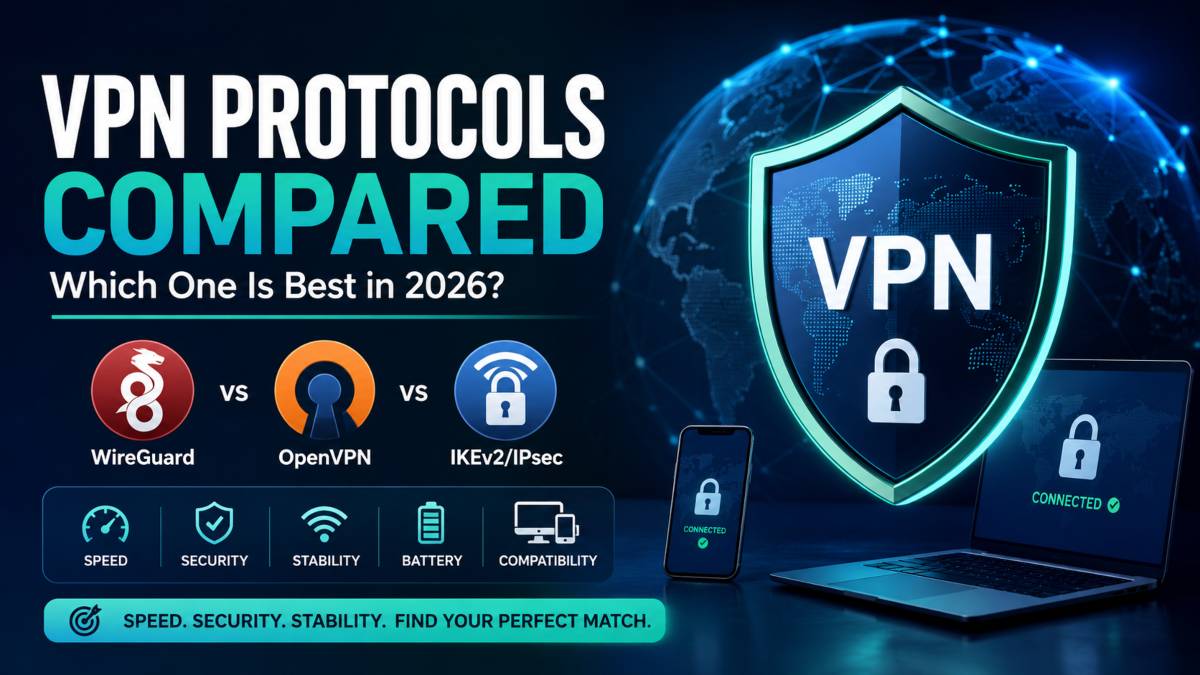
Right now, three names dominate the conversation: WireGuard, OpenVPN, and IKEv2/IPsec. Each protocol handles online traffic differently, and each one fits a different type of user. WireGuard has become the favorite for speed and smooth everyday use. OpenVPN still holds its reputation as the trusted choice for privacy and compatibility. IKEv2/IPsec continues to shine for mobile users who switch between networks throughout the day.
This guide compares the top VPN protocols in 2026 in plain English so you can figure out which one actually fits your needs instead of guessing based on marketing claims.
What Is a VPN Protocol?
A VPN protocol is the system that controls how your device connects to a VPN server and keeps your internet activity protected while data moves across the web. Think of it as the rulebook behind the connection. It decides how information is encrypted, how devices verify identity, and how traffic travels through a secure VPN tunnel without exposing your real location or browsing activity.
Different VPN encryption protocols are built for different priorities. Some focus on raw speed, others focus on stronger privacy, while a few are designed to keep connections stable on mobile devices. This is why two VPNs can feel completely different even when connected to nearby servers.
How VPN Protocols Work
When you connect to a VPN, the protocol creates a secure tunnel between your device and the VPN server. Everything passing through that tunnel gets encrypted so outside parties cannot easily monitor your activity. Encryption scrambles your data into unreadable code, while authentication checks that your device is communicating with a trusted server instead of a fake one.
The protocol also manages data routing. That means deciding how internet traffic moves efficiently between your device and the destination website or service. A lighter protocol like WireGuard can move data faster with less overhead, while older protocols often consume more resources and reduce connection speed.
Why VPN Protocol Choice Matters
Your VPN protocol directly affects your daily experience online. A faster protocol improves streaming quality, gaming responsiveness, and download speeds. Stronger security helps protect sensitive information during banking, remote work, or public WiFi use.
The right protocol also improves mobile stability. Some protocols reconnect smoothly when switching between WiFi and mobile data, which matters for travelers and commuters. Battery use is another factor many users ignore. Lightweight protocols typically drain less power, making them better for phones and laptops used throughout the day.
VPN Protocols Compared in 2026
Choosing the best VPN protocol in 2026 comes down to one simple question: what matters most to you? Some users want maximum speed for streaming and gaming, while others care more about trusted security or stable mobile connections. No single protocol dominates every category, which is why understanding the strengths and weaknesses of each option matters before you connect.
Right now, WireGuard, OpenVPN, and IKEv2/IPsec lead the market for modern VPN use. Older options like L2TP/IPsec and PPTP still appear on some devices, but they are no longer considered ideal for everyday privacy and performance.
| Protocol | Speed | Security | Stability | Best For | Avoid/Use |
|---|---|---|---|---|---|
| WireGuard | Very fast | Strong modern encryption | Excellent | Streaming, gaming, everyday browsing | Best overall choice for most users |
| OpenVPN | Moderate to fast | Highly trusted and widely audited | Very reliable | Privacy, banking, remote work | Best for compatibility and security |
| IKEv2/IPsec | Fast | Strong security | Excellent on mobile | Phones, travel, network switching | Best for mobile stability |
| L2TP/IPsec | Moderate | Older but usable | Stable | Legacy devices and manual setups | Use only as fallback |
| PPTP | Very fast | Weak and outdated | Basic | Legacy systems only | Avoid for privacy and security |
WireGuard currently leads most VPN protocol comparison discussions because it delivers impressive speed without sacrificing modern security. It works especially well for streaming, gaming, and daily browsing on mobile and desktop devices.
OpenVPN still remains the safest recommendation for users who value mature security and broad compatibility across routers, operating systems, and enterprise environments. Even though it can be slower than WireGuard, many privacy focused users still trust it the most.
IKEv2/IPsec stands out for mobile users because it reconnects quickly when switching between WiFi and mobile data. That makes it a smart choice for commuters, travelers, and people who constantly move between networks throughout the day.
WireGuard Review: Why It Leads in 2026
WireGuard has quickly become the top choice for users who want a fast, modern, and reliable VPN experience. In most WireGuard vs OpenVPN comparisons, WireGuard wins on speed, simplicity, and mobile performance. While OpenVPN still holds a strong reputation for compatibility and long term trust, WireGuard has changed expectations around what a VPN protocol should feel like in everyday use.
For most people in 2026, WireGuard delivers the best balance between speed, security, and convenience.
Why WireGuard Is Faster
One of the biggest reasons WireGuard performs so well is its lightweight design. Unlike older VPN protocols packed with years of legacy code, WireGuard uses a much smaller codebase. That means fewer moving parts, quicker processing, and lower strain on devices.
Lower overhead also helps improve connection efficiency. Data moves through the VPN tunnel with less friction, which translates into faster download speeds, smoother streaming, and reduced lag during online gaming sessions.
Latency is another area where WireGuard stands out. Because the protocol handles connections more efficiently, users often notice quicker response times while browsing websites, joining video calls, or playing multiplayer games. On mobile devices, the difference can feel especially noticeable compared to older protocols.
WireGuard Security Features
Speed alone would not matter if security was weak, but WireGuard also brings strong modern encryption to the table. It uses updated cryptographic standards designed to keep connections secure without adding unnecessary complexity.
Its lean architecture improves security in another important way. A smaller codebase is generally easier to audit and maintain, which reduces the chances of hidden vulnerabilities lingering unnoticed for years.
WireGuard also performs extremely well on phones and tablets. Connections stay responsive while using less battery power than many older VPN protocols. That makes it a strong option for users who spend large parts of the day connected through mobile networks or public WiFi.
Best Use Cases for WireGuard
WireGuard works particularly well for streaming because it maintains high speeds while reducing buffering and quality drops. Gamers also prefer it for lower latency and more stable online matches.
For daily browsing, the protocol feels smooth and lightweight without slowing normal internet activity. Remote workers benefit from faster file transfers, stable video meetings, and reliable access to company systems without constant reconnects.
WireGuard Weaknesses
Even though WireGuard is widely praised, it still has a few limitations. Compared to OpenVPN, the ecosystem is newer and less battle tested over decades of use. Some privacy focused users still prefer OpenVPN simply because it has a much longer security track record.
Another issue is that some VPN providers modify WireGuard with custom features or proprietary systems. While these changes can improve privacy or compatibility, they also create differences between providers, which means the WireGuard experience is not always identical across every VPN service.
OpenVPN Review: The Trusted Security Standard
OpenVPN has held its place as one of the most respected VPN protocols for years, and in 2026 it still remains a top choice for users who care deeply about privacy, compatibility, and trusted security. While newer protocols like WireGuard push ahead in raw speed, OpenVPN continues to earn trust through its long history, transparent development model, and strong reputation across the cybersecurity world.
In many OpenVPN vs WireGuard discussions, the choice usually comes down to performance versus maturity. WireGuard feels faster and lighter, but OpenVPN still appeals to users who prefer a proven system with years of public testing behind it.
Why OpenVPN Still Matters
One of the biggest strengths of OpenVPN is its open source reputation. Its code is publicly available, allowing security researchers and developers around the world to inspect it for vulnerabilities and improve its reliability over time.
OpenVPN security also benefits from years of audits and real world use. Unlike newer protocols that are still building long term trust, OpenVPN has survived constant scrutiny from privacy experts, businesses, and enterprise users for decades.
Another reason OpenVPN remains popular is its broad platform support. It works across Windows, macOS, Linux, Android, iPhone devices, routers, and many enterprise systems. That level of compatibility makes it one of the safest choices for users who need stable VPN access across multiple devices and networks.
OpenVPN TCP vs UDP
OpenVPN can run on two transport methods: TCP and UDP. The difference matters because each option affects speed and reliability differently.
UDP is faster and works better for streaming, gaming, and general browsing because it sends data with less overhead. Most users choose UDP for everyday VPN use.
TCP focuses more on reliability. It checks whether every packet of data arrives correctly before continuing transmission. That makes it slower, but more stable for activities like file transfers, sensitive business tasks, or restrictive networks where dropped packets can cause problems.
For most readers, OpenVPN UDP is the better default option unless stability matters more than speed.
Best Use Cases for OpenVPN
OpenVPN performs especially well for banking, remote work, and privacy focused browsing. Users handling sensitive information often prefer it because of its long standing security reputation and extensive compatibility.
It is also a strong choice for bypassing restrictive networks and maintaining stable encrypted connections across different platforms.
OpenVPN Drawbacks
The biggest drawback is speed. OpenVPN is usually slower than WireGuard because it carries more overhead and relies on a much larger codebase.
Manual setup can also feel more technical for beginners. Configuring OpenVPN on routers or custom systems often requires additional files and settings, which makes the process less beginner friendly compared to modern protocols with streamlined setup options.
IKEv2/IPsec: Best VPN Protocol for Mobile Devices
IKEv2/IPsec has built a strong reputation as the best mobile VPN protocol for users who spend large parts of the day moving between networks. While WireGuard dominates conversations around speed and OpenVPN remains the trusted security favorite, IKEv2 stands out for one specific reason: connection stability on mobile devices.
In many IKEv2 vs OpenVPN comparisons, IKEv2 wins when users need a smooth experience on phones, tablets, and laptops constantly switching between WiFi and mobile data.
Why IKEv2 Works Well on Phones
One of the biggest advantages of IKEv2 is fast reconnect capability. If your internet connection briefly drops while commuting, entering an elevator, or switching from home WiFi to mobile data, IKEv2 can reconnect almost instantly without forcing you to manually restart the VPN.
Stable network switching is another major strength. Many VPN protocols struggle when networks change rapidly, but IKEv2 was designed with mobility in mind. That makes it ideal for people who travel often or move between different internet connections throughout the day.
Battery efficiency also helps IKEv2 remain popular on mobile devices. Compared to heavier VPN protocols, it usually consumes less power while maintaining secure connections in the background. For users who stay connected for long periods, that lower battery drain can make a noticeable difference.
Best Situations for IKEv2
IKEv2 works especially well for travelers using airport, hotel, or café WiFi networks. It also fits commuters who regularly move between cellular networks and wireless internet connections.
Hybrid workers benefit from its stability too. Video meetings, cloud applications, and business communication tools often run more smoothly when the VPN connection remains active during network changes.
Limitations of IKEv2
Despite its strengths, IKEv2 is not perfect. Platform support can sometimes vary depending on the operating system, VPN provider, or device configuration. Some services offer stronger optimization for OpenVPN or WireGuard instead.
IKEv2 also lacks the flexibility and customization options available with OpenVPN. Advanced users who want deeper configuration control or broad compatibility across unusual systems may still prefer OpenVPN for those situations.
Older VPN Protocols to Avoid or Use Carefully
Not every VPN protocol has aged well. While modern options like WireGuard, OpenVPN, and IKEv2 continue improving speed and security, older VPN protocols now struggle to meet current privacy standards. Some still appear on older devices and corporate systems, but most users should treat them as backup options rather than primary choices.
When comparing PPTP vs L2TP, the biggest difference is simple: one is outdated but usable in limited situations, while the other should generally be avoided altogether.
Why PPTP Is No Longer Safe
PPTP was once popular because it was fast and easy to configure, especially during the early years of consumer VPN services. The problem is that its security foundation is now considered outdated and vulnerable.
Its encryption methods are weak by modern standards, and security researchers have identified flaws that can expose user data to attackers. Even though PPTP may still deliver decent speed, the privacy tradeoff is far too risky for sensitive browsing, banking, streaming accounts, or business use.
In 2026, PPTP survives mostly because older hardware and legacy systems still support it. For anyone serious about online privacy, it is no longer a safe recommendation.
Is L2TP/IPsec Still Worth Using?
L2TP/IPsec offers stronger protection than PPTP, but it still feels outdated compared to newer VPN protocols. Performance is generally slower because the protocol adds extra layers of encapsulation during data transmission.
That said, L2TP/IPsec can still serve as a fallback option for legacy compatibility. Some older routers, operating systems, and manual VPN configurations continue supporting it when newer protocols are unavailable.
When Older Protocols Still Appear
Legacy VPN protocols usually appear in older routers, aging corporate environments, or manual VPN setups that have not been updated in years. Some organizations continue using them simply because replacing infrastructure takes time and money.
For most modern users, though, newer protocols offer a far better mix of speed, stability, and security without relying on outdated technology.
Which VPN Protocol Should You Choose?
The best VPN protocol depends on how you use the internet every day. Some people want maximum speed for streaming and gaming, while others care more about trusted security or stable mobile connections. Instead of chasing technical specs, it is easier to choose a protocol based on your actual needs.
Here is the simple breakdown for 2026.
Best for Speed and Streaming
Winner: WireGuard
If your priority is fast performance, WireGuard is currently the best VPN protocol for streaming, gaming, and everyday browsing. It delivers lower latency, quicker connection speeds, and smoother performance than many older VPN protocols.
Streaming platforms load faster, video quality stays more stable, and online games feel more responsive. WireGuard also performs extremely well on phones and laptops because its lightweight design reduces overhead and battery drain.
For most users, WireGuard offers the best balance between speed and modern security.
Best for Privacy and Compatibility
Winner: OpenVPN
OpenVPN remains the strongest choice for users focused on privacy, security, and broad device compatibility. Its long standing reputation, open source transparency, and years of security audits continue to make it a trusted option in 2026.
It works across a huge range of devices, routers, and operating systems, making it ideal for users who need dependable encrypted connections in different environments.
If you handle sensitive work, banking, or privacy focused browsing, OpenVPN is still one of the safest choices available.
Best for Mobile Stability
Winner: IKEv2/IPsec
IKEv2/IPsec shines on mobile devices because it reconnects quickly when switching between WiFi and cellular networks. That makes it perfect for commuters, travelers, and hybrid workers constantly moving between internet connections.
Its stable performance and lower battery usage also make it one of the most practical choices for smartphones and tablets.
Best for Older Devices
Winner: L2TP/IPsec
L2TP/IPsec is no longer considered a leading protocol, but it can still help with older routers, outdated operating systems, and legacy corporate systems that do not support newer VPN technologies.
It works best as a fallback option rather than a first choice.
Protocols You Should Avoid
Avoid: PPTP
PPTP is outdated and no longer secure enough for modern internet use. While it may still appear on older systems, its weak encryption and known vulnerabilities make it a poor choice for privacy and data protection.
For almost every user in 2026, there are far safer alternatives available.
Final Verdict
After comparing the top VPN protocols in 2026, the answer becomes surprisingly simple. WireGuard is the best overall choice for most users because it delivers the strongest mix of speed, security, and smooth everyday performance. Whether you stream content, play online games, work remotely, or browse on public WiFi, WireGuard handles modern internet use with very little friction.
That said, OpenVPN still deserves its reputation as the trusted conservative option. Its long history, open source transparency, and wide compatibility continue to make it a strong pick for users who value proven security above everything else. If privacy and reliability matter more than raw speed, OpenVPN remains a smart choice.
For mobile users, IKEv2/IPsec continues to stand out. Its ability to reconnect quickly during network changes makes it ideal for travelers, commuters, and anyone switching between WiFi and mobile data throughout the day.
The best protocol ultimately depends on how you use your devices. For most people, though, the decision tree is straightforward in 2026: choose WireGuard for speed and daily use, OpenVPN for trusted security, and IKEv2/IPsec for mobile stability.